


As a leading supplier of offshore cranes, I've witnessed firsthand the critical role these machines play in the demanding offshore environment. One of the most important aspects of ensuring the safety and efficiency of offshore cranes is their under - load protection features. In this blog, I'll delve into the various under - load protection features of our offshore cranes, which are designed to safeguard both the equipment and the personnel working in the challenging offshore conditions.
1. Load Moment Indicator (LMI)
The Load Moment Indicator is a fundamental under - load protection feature in our offshore cranes. It continuously monitors the load being lifted and the crane's boom angle, radius, and length. By calculating the load moment (the product of the load and its distance from the crane's pivot point), the LMI can determine whether the crane is operating within its safe working limits.
If the load moment approaches or exceeds the pre - set safe limit, the LMI will trigger an alarm, alerting the crane operator to take immediate action. In some cases, it can also automatically restrict the crane's movement to prevent overloading. This feature is crucial as it helps prevent structural damage to the crane and reduces the risk of accidents caused by overloading. For example, in an Offshore Pedestal Crane, the LMI ensures that the pedestal structure and the boom can handle the load safely, even in dynamic offshore conditions where wave and wind forces can affect the load distribution.
2. Overload Protection Device
Our offshore cranes are equipped with advanced overload protection devices. These devices use sensors to measure the actual load being lifted. When the load exceeds the rated capacity of the crane, the overload protection device will cut off the power supply to the lifting mechanism, preventing further lifting.
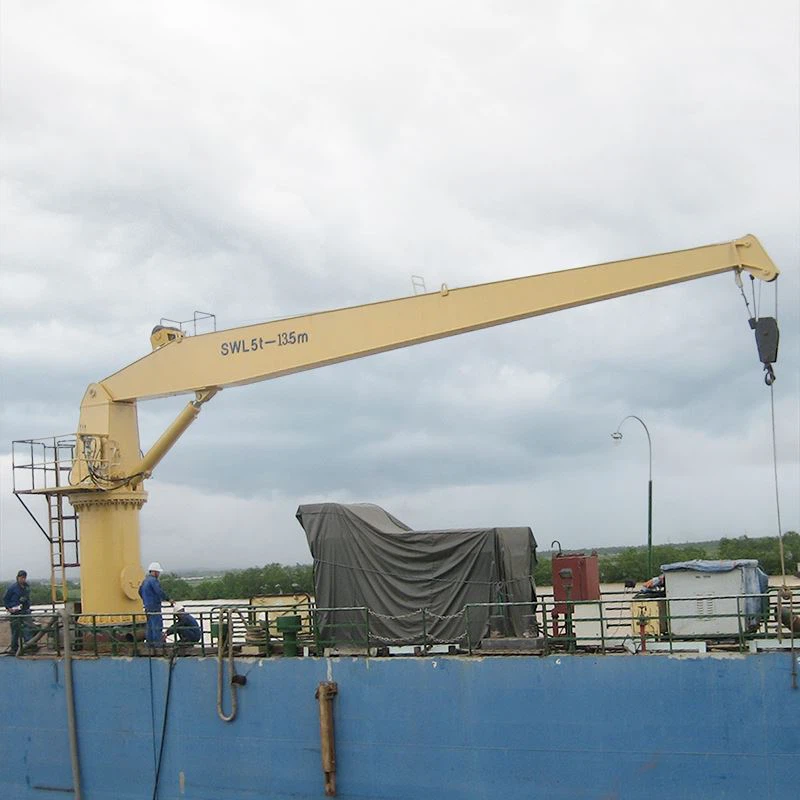
This is a fail - safe mechanism that provides an additional layer of protection against overloading. It is especially important in situations where the LMI may malfunction or where there are sudden changes in the load, such as when the load gets caught on an obstacle. For a Fixed Boom Offshore Crane, the overload protection device ensures that the fixed boom structure is not subjected to excessive stress, which could lead to catastrophic failure.

3. Anti - Two - Blocking System
The anti - two - blocking system is designed to prevent the hook block from colliding with the boom tip or the jib. This can happen when the load is being hoisted to its maximum height and the operator fails to stop the hoisting operation in time.
In our offshore cranes, the anti - two - blocking system uses sensors to detect the position of the hook block relative to the boom tip. When the hook block approaches a pre - determined safe distance from the boom tip, the system will send a warning signal to the operator. If the operator does not respond, the system will automatically stop the hoisting operation. This feature is essential as a two - block situation can cause severe damage to the crane's hoisting equipment and pose a significant safety risk. In an Eccentric Offshore Grab Crane, the anti - two - blocking system ensures the safe operation of the grab mechanism and the overall crane structure.
4. Emergency Stop Button
Every offshore crane we supply is equipped with an easily accessible emergency stop button. In case of an emergency, such as a sudden overloading situation or a malfunction in the crane's control system, the operator can quickly press the emergency stop button to halt all crane operations.
The emergency stop button cuts off the power supply to all the crane's motors and control circuits, bringing the crane to an immediate stop. This helps prevent further damage to the crane and reduces the risk of injury to the operator and other personnel on the offshore platform. It is a simple yet effective under - load protection feature that provides an extra level of safety in critical situations.
5. Dynamic Load Compensation
Offshore cranes are exposed to dynamic loads caused by wave motion, wind forces, and the movement of the offshore platform itself. Our cranes are designed with dynamic load compensation features to account for these factors.
The dynamic load compensation system uses advanced sensors to measure the acceleration and movement of the crane and the load. Based on these measurements, the system adjusts the lifting force and the crane's movement to ensure a smooth and stable lifting operation. This helps prevent excessive stress on the crane's structure and reduces the risk of load swinging, which can be dangerous in the offshore environment. For example, when the crane is lifting a heavy load on a wave - tossed offshore platform, the dynamic load compensation system ensures that the load remains stable and the crane operates within its safe limits.
6. Structural Monitoring System
To ensure the long - term safety and reliability of our offshore cranes, we incorporate a structural monitoring system. This system uses strain gauges and other sensors to continuously monitor the stress and deformation of the crane's main structural components, such as the boom, the pedestal, and the jib.
If the stress levels in any of these components approach or exceed the allowable limits, the structural monitoring system will send an alert to the operator and the maintenance team. This allows for timely inspection and maintenance of the crane, preventing potential structural failures caused by overloading or fatigue. The structural monitoring system is an important under - load protection feature as it helps extend the service life of the crane and ensures its safe operation over time.
7. Wind Speed and Direction Sensor
Wind is a major factor in the offshore environment, and it can significantly affect the lifting capacity and stability of an offshore crane. Our cranes are equipped with wind speed and direction sensors to monitor the wind conditions.
When the wind speed exceeds a pre - set limit, the crane's control system will restrict certain operations, such as slewing or lifting heavy loads. The wind direction sensor also helps the operator adjust the crane's position to minimize the effect of the wind on the load and the crane structure. This feature is crucial for preventing accidents caused by wind - induced overloading and instability.
Contact for Purchase and Negotiation
If you are in the market for high - quality offshore cranes with advanced under - load protection features, we are here to assist you. Our team of experts can provide you with detailed information about our products, including the Offshore Pedestal Crane, Fixed Boom Offshore Crane, and Eccentric Offshore Grab Crane. We are committed to providing customized solutions to meet your specific offshore lifting needs. Whether you need a crane for a small - scale offshore project or a large - scale deep - sea operation, we have the expertise and the products to ensure your success. Contact us today to start the purchase negotiation process and take the first step towards a safer and more efficient offshore lifting solution.
References
- "Offshore Crane Design and Operation" - Industry Handbook on Offshore Equipment
- "Safety Standards for Offshore Cranes" - International Maritime Organization Guidelines
- "Advanced Load Protection Technologies in Cranes" - Journal of Marine Engineering and Technology