


If you've ever stood beside a deck crane on a working vessel, you know they're built to take a beating. Constant exposure to salt spray, high humidity, rough seas, and even the occasional splash of cargo residues turns what's supposed to be a reliable workhorse into something that needs careful care if you want it to last years, not just months. As a deck crane supplier, I've spent years walking docks with ship engineers, going through the exact struggles of corrosion that every marine crane owner faces, and testing solutions that actually hold up in real-world conditions. This post is the stuff I tell them-no jargon, just the proven corrosion-prevention methods that keep deck cranes running when they need to.
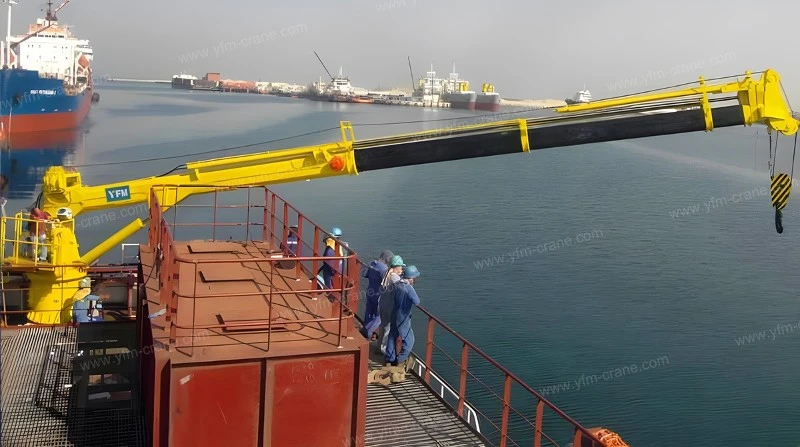
Marine deck crane on vessel deck, salt spray corrosion protection
First, let's get one thing straight: deck crane corrosion isn't just an eyesore. It's a safety risk. A pitted boom or a corroded hydraulic line can fail mid-lift, putting cargo, crew, and the vessel itself in danger. For operators, it also means costly downtime-delays in port, expensive repairs, and even regulatory fines if the crane doesn't meet maritime safety standards. The good news is that most corrosion is preventable if you get the right measures in place early, and matched to the type of crane you have.
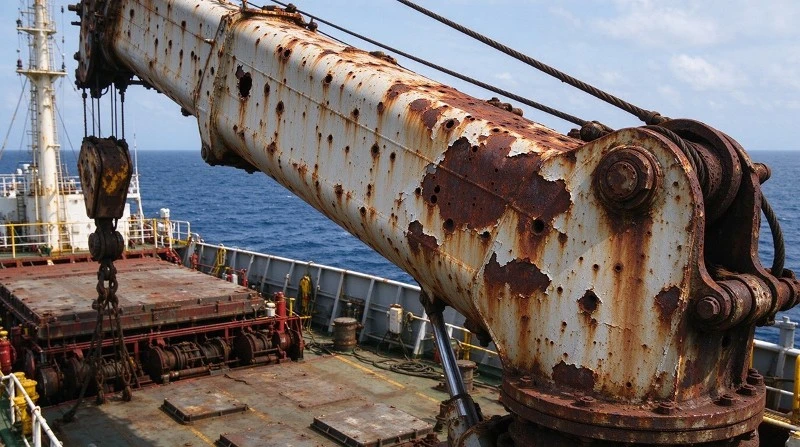
Pitted corrosion on marine crane boom. Corrosion creates serious safety hazards during lifting operations
Let's start with the foundational step that sets all other prevention up: choosing the right materials for your specific deck crane. Not all cranes are the same, after all. A grab crane for a bulk carrier, for example, handles dusty, abrasive bulk cargo that can scratch protective coatings, while a cargo grab deck crane is exposed to constant saltwater spray from handling over the side of the ship. The base material matters here. Standard steel is cheap, but it rusts fast. For primary structural components-booms, masts, load-bearing pivots, and crane bases-hot-dip galvanized steel is a no-brainer for many applications. It's coated in a layer of zinc that acts as a sacrificial barrier: when saltwater hits, the zinc corrodes before the steel underneath does.
For even harsher conditions, like cranes operating in polar waters or tropical regions with extreme humidity, we use high-tensile stainless steel grades like 316L, which has extra chromium and molybdenum to resist pitting corrosion from salt. It's a little pricier upfront, but it cuts maintenance costs by 60% or more over the crane's lifespan, so it pays for itself fast. Even smaller cranes, like the compact motor davit crane used for moving crew or small stores, benefit from galvanized or stainless steel parts because they're easier to inspect and keep in good shape.
Next, protective coatings are your first line of defense. But not just any paint-marine-grade coatings formulated specifically for high-wear, high-corrosion environments. I've seen too many shipyards slap on regular industrial paint that chips and peels within a year because it wasn't designed to handle salt and mechanical abrasion. The best coating systems for deck cranes are multi-layer, like a sandwich: a primer, a mid-layer, and a topcoat. The primer is critical because it bonds to the metal and seals out moisture and oxygen. We use zinc-rich epoxy primers for all our cranes, including the articulated boom deck crane, since the boom has lots of moving joints where moisture can seep in. The mid-layer adds thickness and impact resistance-polyurethane or vinyl ester mid-layers work well to handle the bumps from cargo, the scrape of a cargo grab, or the pressure of cleaning the crane with high-pressure water in port. The topcoat is what you see, and it's the final barrier: we use aliphatic polyurethane topcoats because they don't fade or chalk in UV light, and they stay flexible enough to not crack when the crane moves through its full range of motion. One trick we teach customers is to touch up any chips or scratches within 72 hours of them happening-don't wait until the whole crane looks rusty. A small chip that goes untreated will turn into a rust patch the size of a dinner plate in a single voyage.
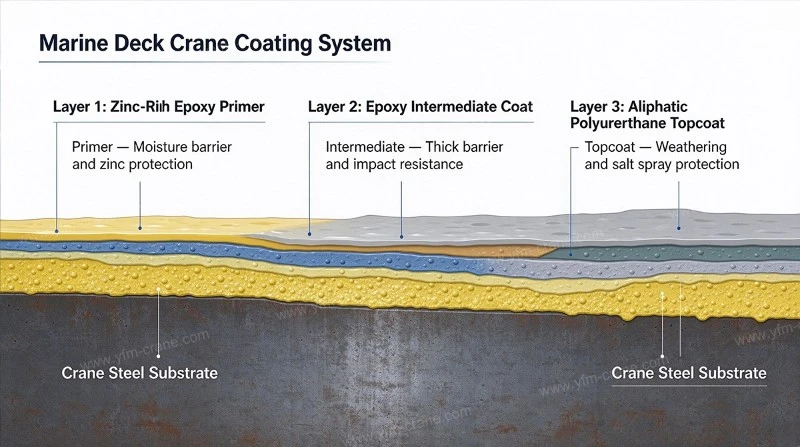
Multi-layer marine coating system: zinc-rich primer, intermediate coat, aliphatic polyurethane topcoat for anti-corrosion
Then there's cathodic protection, which is like a safety net for the metal. Cathodic protection works on the principle that different metals have different electrical potentials-one will corrode to protect another. For deck cranes, two main types work: impressed current and sacrificial anode systems. Sacrificial anodes are the most common for smaller cranes or vessels that don't have complex electrical systems. They're blocks of zinc or magnesium bolted to the crane's base, hull, or submerged parts (like if the crane has a pontoon base for working in shallow water). The anode corrodes slowly over time, taking the hit for the steel crane. We typically replace them every 18 to 24 months during regular vessel dry-docks, and it's a cheap, low-effort fix that prevents deep rust in hard-to-reach areas. Impressed current systems are better for larger cranes, like the heavy-lift models, because they provide more consistent protection even when water conditions change. They use a small power source to send a low electrical current through the crane, making it the "cathode" (the part that doesn't corrode) instead of the "anode" (the part that does). We've installed impressed current systems on the grab crane for bulk carriers that operate year-round in the Baltic Sea, and after five years, their crane bases still look like new, with almost no corrosion pitting.

Sacrificial zinc anode mounted on deck crane base, cathodic protection system for marine equipment.
Maintenance is where a lot of owners go wrong-they wait until they see rust to act, instead of doing regular checks. A deck crane should be inspected at least every three months when the vessel is in port, and every month if it's operating in a high-corrosion zone, like the Arabian Gulf or Southeast Asia. The inspections aren't just walking around looking for rust-you need to get into the moving parts: pivot points, hydraulic cylinders, the joints on the articulated boom deck crane, and the sheave wheels that hold the lifting cables. Wipe down every part with fresh water after every voyage, especially if the crane has been exposed to saltwater. Salt is hygroscopic, meaning it absorbs moisture from the air, so even a light dusting of salt can keep metal damp and causing corrosion for weeks. For cranes that handle bulk cargo, like the grab crane for bulk carrier, the dust and cargo residues are abrasive and can scratch coatings, so you need to clean the crane's working surfaces with a soft brush (not a hard metal one, which can scratch coatings) and mild detergent, not just high-pressure water that can force water into joints. Lifting cables are another often-overlooked part-rust on a cable can weaken it by up to 30%, so inspect the cable every time you use the crane, and lubricate it with marine-grade cable lubricant to keep salt out of the strands. We also recommend keeping a small maintenance kit on board: touch-up paint matching your crane's topcoat, spare sacrificial anodes, a wire brush for small rust spots, and a multi-tool to tighten joints where corrosion might have loosened bolts.
Another big one is managing drainage and ventilation on the crane. Corrosion loves standing water, and deck cranes have plenty of places where water can pool: in boom sections, under the base, around pivot joints, and inside control boxes. If those pools don't drain, they'll turn into rust factories. That's why all our cranes-from the compact foldable boom provision crane for small cargo ships to heavy-lift grab cranes-are designed with pre-drilled drainage holes in the lowest points of every structural part. We make sure those holes aren't blocked by bolts or seals, and we tell customers to check them every month to clear out any debris that might have built up. For enclosed parts, like control cabinets or hydraulic line housings, ventilation is key. Stagnant air with high humidity inside a cabinet will cause rust on metal components even if the outside is dry. We install small, breathable vent caps on all our crane control boxes to let moisture escape while keeping water out, and we recommend adding a small desiccant pack inside if your vessel is operating in very humid climates.
Let's not forget about training your crew. A lot of corrosion issues aren't from bad parts or design-they're from how the crane is operated. For example, when a crew member cleans the crane with a high-pressure washer, directing water at a pivot joint at a bad angle can force water and salt into the metal, causing corrosion that will show up six months later. Or leaving the crane's boom extended and unwashed after a day of lifting in salt spray gives salt time to set in. We host free training sessions for all our customers, teaching crew the basics of corrosion prevention: how to clean the crane properly, how to spot early signs of corrosion, and what not to do (like using metal scrapers to remove rust, which scratch coatings). Even small things, like lubricating moving joints after every use, make a huge difference-lubrication not only reduces wear but also creates a barrier between metal and the air.
When it comes to specific crane types, the needs shift a little, and that's where our experience as a supplier comes in. For example, cargo grab deck crane operators often deal with the cargo grab scraping against the deck or the side of the ship, chipping the coating on the crane's boom. We recommend adding a flexible, abrasion-resistant rubber strip to high-wear areas, and keeping extra touch-up paint on hand for quick fixes. For grab crane for bulk carrier, the constant dust from grain, coal, or ore can clog drainage holes, so we schedule a quarterly check of those holes specifically. Articulated boom deck cranes have more joints than straight-boom cranes, so we make sure to apply extra thick coating at each joint, and we suggest lubricating those joints every two weeks instead of monthly. The 500kg hydraulic/electric small man-ridding marine ship crane is often used for moving crew and small parts, so it's moved more often than larger cranes-meaning more opportunities for coatings to get scraped during transport, so we include extra coating kits with every delivery for that reason. Even foldable boom provision cranes, which are stowed most of the time, need attention: folding the boom can rub the boom sections together, so a thin coat of anti-rust wax between the sections during long stowage periods prevents corrosion while the crane isn't in use.
I've seen what happens when you skip these steps. Last year, a shipowner called us with a 10-year-old bulk carrier's grab crane that had so much corrosion on its boom, they were afraid to use it for heavy lifts. The total repair cost-replacing corroded sections, recoating the whole crane, and updating cathodic protection-was $120,000. If they'd stuck to a regular maintenance schedule and done those basic prevention steps, that crane would have looked like it was 5 years old, and they would have only spent $8,000 on annual maintenance. That's the difference between proactive and reactive care.
If you're a ship operator, a fleet manager, or someone in charge of maintaining deck cranes, don't wait until rust becomes a problem. Investing in the right materials, coatings, and maintenance routines is the easiest way to keep your crane safe, compliant, and working for years. We've built a range of deck cranes designed with corrosion prevention at their core-from the compact 500kg hydraulic/electric small man-ridding marine ship crane to heavy-duty models like the cargo grab deck crane and grab crane for bulk carrier-all engineered to handle the harshest marine conditions.
To learn more about our corrosion-resistant deck cranes or discuss a maintenance plan tailored to your vessel, we're here to help. Get in touch to talk through your specific needs, and we'll walk you through the best solutions to keep your crane corrosion-free and reliable for every voyage.
References:
-
ISO 20313:2018 Ships and marine technology - Cathodic protection of ships
ABS Rules for Building and Classing Marine Vessels, 2020
IMO MSC.1/Circ.1663 Guidelines for maintenance of ship lifting appliances
NACE SP0169 Control of External Corrosion on Underground or Submerged Metallic Piping Systems