


Marine Crane
A marine crane, also known as a shipboard crane or offshore crane, is a specialized type of crane designed for use on ships, offshore platforms, or other marine vessels. These cranes are typically used for lifting heavy loads on and off ships or offshore structures, such as cargo, containers, equipment, or supplies. Marine cranes are engineered to withstand the harsh marine environment, including saltwater exposure, high winds, and dynamic vessel movements. They are often mounted on the deck of a ship or on offshore platforms and may be operated hydraulically, electrically, or with a combination of both. As a result, cranes with compact structures, simple and reliable operation, and large lifting capacity emerged.
-
![Fixed Boom Deck Crane]() Fixed Boom Deck CraneThis fixed boom deck crane adopts an electro-hydraulic drive mode with a rated lifting capacity of 30 tons. Its jib is designed with a box-type structure, featuring stable structure and strong...read more
Fixed Boom Deck CraneThis fixed boom deck crane adopts an electro-hydraulic drive mode with a rated lifting capacity of 30 tons. Its jib is designed with a box-type structure, featuring stable structure and strong...read more -
![Eccentric Offshore Grab Crane]() Eccentric Offshore Grab CraneYFM Eccentric Offshore Grab Crane is designed for transferring cargo between a bulk carrier and a barge. Compared to the normal cargo crane, it has a 10m eccentric arm boom to expand the scope of...read more
Eccentric Offshore Grab CraneYFM Eccentric Offshore Grab Crane is designed for transferring cargo between a bulk carrier and a barge. Compared to the normal cargo crane, it has a 10m eccentric arm boom to expand the scope of...read more -
![Marine Telescopic Knuckle Crane]() Marine Telescopic Knuckle CraneThis crane is a marine telescopic knuckle crane, capable of lifting loads up to 3.9T·m, making it ideal for various marine tasks such as lifting maintenance equipment, cargo handling, and...read more
Marine Telescopic Knuckle CraneThis crane is a marine telescopic knuckle crane, capable of lifting loads up to 3.9T·m, making it ideal for various marine tasks such as lifting maintenance equipment, cargo handling, and...read more -
![Grab Crane For Bulk Carrier]() Grab Crane For Bulk CarrierGrab Crane Dedicated for Bulk Carriers | Efficient · Intelligent · Weather-resistantread more
Grab Crane For Bulk CarrierGrab Crane Dedicated for Bulk Carriers | Efficient · Intelligent · Weather-resistantread more
YFM grab crane for bulk carriers is a high-efficiency lifting equipment designed specifically for bulk... -
![Personnel Lifting Crane]() Personnel Lifting CraneSafe, Certified Man-Riding Solution For Marine & Offshore Operationsread more
Personnel Lifting CraneSafe, Certified Man-Riding Solution For Marine & Offshore Operationsread more
The Personnel Lifting Crane is a marine or offshore crane equipped with a certified man-riding winch and... -
![Telescopic Boom Marine Deck Crane]() Telescopic Boom Marine Deck CraneSpace-saving YFM 5-Ton telescopic boom marine deck crane for LNG bunkering and OSV vessels. 5T SWL, 4-29m reach, 1T personnel lifting, dual-brake safety system,DNV approved.read more
Telescopic Boom Marine Deck CraneSpace-saving YFM 5-Ton telescopic boom marine deck crane for LNG bunkering and OSV vessels. 5T SWL, 4-29m reach, 1T personnel lifting, dual-brake safety system,DNV approved.read more
Rated lifting... -
![Telescopic Hydraulic Crane]() Telescopic Hydraulic CraneThe telescopic hydraulic crane is an electro-hydraulically driven marine lifting equipment. It realizes the telescoping, slewing and luffing movements of the boom through the hydraulic system, and...read more
Telescopic Hydraulic CraneThe telescopic hydraulic crane is an electro-hydraulically driven marine lifting equipment. It realizes the telescoping, slewing and luffing movements of the boom through the hydraulic system, and...read more -
![Telescopic Knuckleboom Crane]() Telescopic Knuckleboom CraneYFM telescopic knuckleboom crane features a combined telescopic and knuckle boom design.The crane's boom can extend and retract in a straight position. When not in use, the boom can be folded at...read more
Telescopic Knuckleboom CraneYFM telescopic knuckleboom crane features a combined telescopic and knuckle boom design.The crane's boom can extend and retract in a straight position. When not in use, the boom can be folded at...read more -
![Fully Foldable Knuckle Boom Crane]() Fully Foldable Knuckle Boom CraneFully Foldable Knuckle Boom Crane is a highly compact and flexible articulated marine lifting device. Its main boom and jib are connected via hinges, allowing the boom assembly to be fully folded...read more
Fully Foldable Knuckle Boom CraneFully Foldable Knuckle Boom Crane is a highly compact and flexible articulated marine lifting device. Its main boom and jib are connected via hinges, allowing the boom assembly to be fully folded...read more -
![Transshipment Deck Crane]() Transshipment Deck CraneYFM Transshipment Deck Crane is a heavy‑duty marine crane specially designed for ship‑to‑ship and ship‑to‑shore offshore transshipment. Built with marine‑grade high‑strength steel, C5‑M...read more
Transshipment Deck CraneYFM Transshipment Deck Crane is a heavy‑duty marine crane specially designed for ship‑to‑ship and ship‑to‑shore offshore transshipment. Built with marine‑grade high‑strength steel, C5‑M...read more -
![Floating Barge Crane]() Floating Barge CraneA floating barge crane refers to a hoisting device custom-designed for working conditions with constraints on operating radius, water depth and ground foundation, which is fixedly installed on a...read more
Floating Barge CraneA floating barge crane refers to a hoisting device custom-designed for working conditions with constraints on operating radius, water depth and ground foundation, which is fixedly installed on a...read more -
![Marine Lifting Crane]() Marine Lifting CraneA marine lifting crane is a specialized lifting device that is dedicated for marine environments, installed on the decks of various ships, and used for bulk cargo handling.read more
Marine Lifting CraneA marine lifting crane is a specialized lifting device that is dedicated for marine environments, installed on the decks of various ships, and used for bulk cargo handling.read more
YFM Marine...


High loading and unloading efficiency
Due to its good positioning ability, it reduces the handling of goods in the cargo hold, and there is no need to frequently adjust the position of the suspension rod like the suspension rod device, which can cause loading and unloading operations to pause midway. At the same time, the crane can handle the operation of both the front and rear compartments.
Easy to operate
There is almost no preparation work before use. The operator operates in a high-position cab with a wide field of vision and powerful operation.
layout of the deck is relatively simple
The layout of the deck is relatively simple and occupies a small deck area.
Especially suitable for lifting heavy cargo
Any container ship with lifting equipment must be a crane.
Our factory
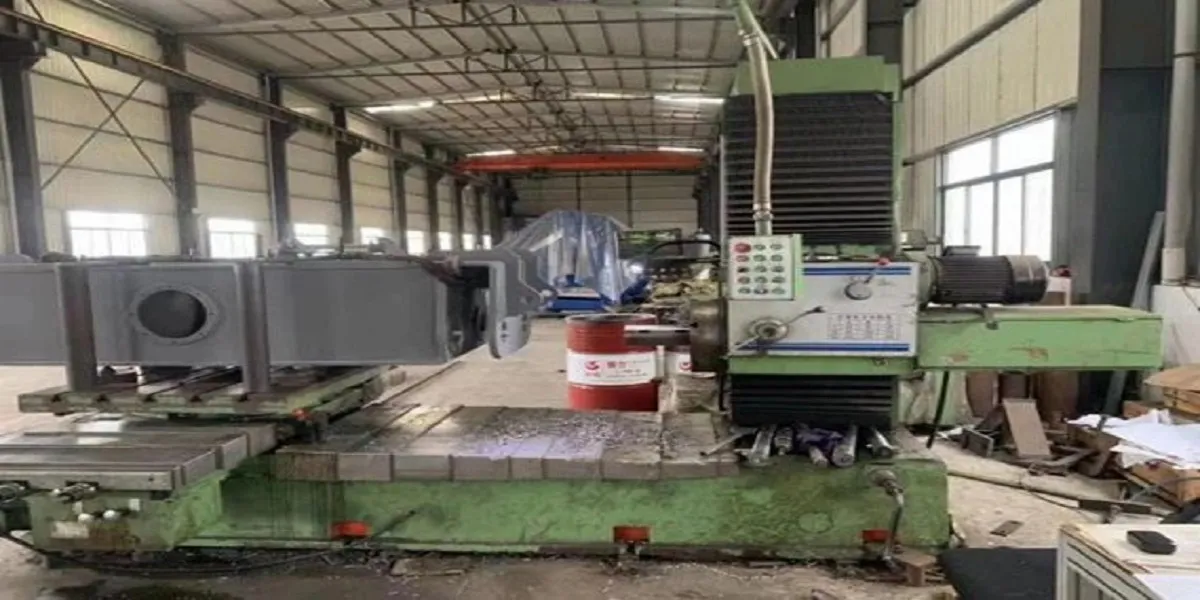
Ifima Technology (Shanghai) Co., Ltd.(YFM) was established as an agent subsidiary of Jiangsu YFM group company focuses on expanding oversea market of the crane business. The factory covers an area of 18,000 square meters, with a scientific management team, advanced production equipment, exquisite technology, professional testing and inspecting equipment, as well as completed management system.
Our product
The company's main products are Marine cranes, port cranes, bulk cargo handling grab, and related customized steel structure products.
Our service
There is a skilled sales and R&D team focuses on providing solution-based services pre and after sale to our clients. In order to extend the service life of equipment, Our dedicated team will provide regular maintenance and repair service for your crane , this service is not limited to our products.
Our certificate
As a design and production enterprise of Marine and port equipment , it has been certified by Chinese CCS, American ABS, French BV, Norwegian DNV, British LR, Korean KR, Japanese NK, Russian RS and other classification societies.
Types of Marine Crane
Deck crane
Machinery installed on the deck of a ship. This type of crane has a compact structure, allowing the ship to have more deck area available for use and less impact on the line of sight above the bridge. The deck crane is easy to operate, with high loading and unloading efficiency, flexible mobility, and no tedious preparation work before operation, making it increasingly widely used. The commonly used deck cranes include fixed rotating cranes, mobile rotating cranes, and gantry cranes. There are two types of transmission methods: electric transmission and electric hydraulic transmission.
Fixed rotating/slewing crane
This type of crane is the most widely used and can operate independently or in pairs on the starboard and starboard sides. The lifting capacity is generally 3-5 tons. On multi-purpose ships, it is required that a single crane can lift a 20-foot container and a double crane can lift a 40-foot container (30 tons), with a lifting capacity of 25-30 tons.
Mobile rotary crane
When loading and unloading goods, it is often necessary to use a mobile rotating crane when the crane span is large and the crane boom is not too long. There are two types of mobile rotary cranes: horizontal movement along the ship and vertical movement.
Gantry crane
This type of crane is widely used by container ships and barges, usually in the form of a quadruped or C-type. There is an extendable boom, a lifting crossbar, a movable bridge, and a cab. The horizontal main beam of the bridge is higher than the container stacked on the deck and has an automatic positioning device, which can accurately place the container in the container compartment or stack it on the deck during loading. There are more gantry cranes on the barge than on the container ship, with a lifting capacity of several hundred tons.
Other loading and unloading machinery
There are mainly elevators, hoists, and conveyors. An elevator is a mechanical device that moves vertically along a guide rail on a ship, used to lift and lower cargo between different decks. On roll-on/roll-off ships, elevators are often used to connect each deck for transporting goods. There are several types of elevators on roll-on/roll-off ships, including scissor type and chain type, with a length of 9-18.5 meters and a width of 3-5 meters. Some cargo barges are also equipped with elevators for loading and unloading cargo barges, but their lifting capacity is much larger than that on roll-on/roll-off ships. Elevators are used to continuously transport goods in the vertical or larger inclined direction. A conveyor continuously transports goods in a horizontal or slightly sloping direction. These two types of machinery are mostly used on self-dumping ships or ships that load and unload through gangways.
Marine cranes have a wide range of applications in the maritime industry. Here are some typical applications of marine cranes:
Cargo handling
Marine cranes are extensively used for loading and unloading cargo onto ships, including containers, bulk commodities, and general cargo. They play a crucial role in port operations, facilitating the efficient and safe transfer of goods between vessels, trucks, and storage facilities.
Offshore operations
Marine cranes are deployed in various offshore operations, such as oil and gas exploration, production, and maintenance. They are used for lifting heavy equipment, materials, and supplies onto offshore platforms and for assembly, installation, and maintenance of offshore structures and components.
Shipbuilding and repair
Marine cranes are integral to shipbuilding and repair processes. They are used for lifting and positioning ship components, such as hull sections, superstructures, engines, and machinery. Marine cranes also assist in launching newly constructed vessels into the water and dry-docking ships for maintenance and repairs.
Salvage and towing
In emergency situations or salvage operations, marine cranes are employed to lift and remove wrecked or damaged vessels from the water. They also assist in towing operations, where cranes are used to connect tow lines and manoeuvre floating structures.
Marine research
Marine cranes are utilized in scientific research vessels and platforms for deploying and recovering oceanographic instruments, such as buoys, moorings, and remotely operated vehicles (rovs). These cranes enable scientists to conduct various studies and data collection activities in marine environments.
Offshore wind energy
With the growth of offshore wind farms, marine cranes play a vital role in the installation and maintenance of wind turbine components. They are used to lift and position turbine towers, blades, nacelles, and other heavy equipment during construction and maintenance activities.
Marine construction
Marine cranes can be used for various construction tasks on offshore platforms, such as installing and removing equipment and materials.
Structure of Marine Cranes


The base: Pedestal and tower
At its base, a marine crane has its foundation, which offers stability and contains critical constituents. Here comes the pedestal. Imagine a solid, cylindrical column securely fixed to the deck of any ocean-going vessel or barge. This is referred to as the pedestal made from high-strength marine-grade steel that can stand against saltwater corrosion, wind, and waves in perpetuity. Inside this pedestal lies the slewing mechanism, which can be thought of as being akin to “muscles” since they enable it to turn in full 360 degrees.” this mechanism makes use of powerful hydraulic motors or electric drives to ensure smooth sliding from one point to another. In bigger cranes, there is a tall structure termed a tower mounted above a pedestal. The vertical post adds further height and range, enabling the crane to lift heavier loads over longer distances. Normally, a tower uses lattice work made up of steel beams, offering more flexibility and balance between weight and strength.
The lifting arm: The boom and its maneuvering magic
The crane’s boom remains the most conspicuous part of it. This lengthy, crosswise arm stretches either from the tower or directly from the pedestal (in smaller cranes) to make it possible for it to reach out and lift cargo. Fixed boom: A design where there is an unchangeable length and lifting capacity. It can be used on certain ship cranes. Telescopic boom: A multi-purpose variant that has nested parts that are extendable hydraulically and then contracted with the intention of adapting its reach. These are perfect for port operations where cranes must adjust themselves according to the size of ships. Knuckle boom: Common on workboats or barges, this design has a hinged joint at its base, enabling more exactitude in handling and moving around barriers. Regardless of what type they may be, the booms are engineering marvels that are composed of high-strength steel material carefully designed to bear heavy loads yet remain steady. The boom can withstand all forces associated with bending and twisting during the lifting process because there are internal reinforcements as well as strategic weight distribution in its construction.
The lifting powerhouse: Winches and hoisting systems
It is the hoisting system that functions as the magical ingredient in lifting heavy objects. Comprising a robust winch, wire rope and a hook. Powered by either hydraulics or electric motors, the winch is the mainstay that coils up the wire rope thus moving up and down. Wire rope made of high-quality steel filaments acts as “muscle” for transmitting pulling force from winch to load. Lastly, hook, a strong steel fitting that connects cargo being lifted. In many cases, modern cranes have incorporated advanced features into their hoisting system. By limiting the loads, it ensures that no crane will go out of its safe working range of operation.When there’s more than one weight being lifted at once, anti-two-block collision technology helps prevent accidental damage due to hitting something together with them while they are rising upwards. Additionally, some cranes boast variable speed control for precise maneuvering of the load.
Sway control and counterweights: Keeping it steady
Cranes that operate on vessels such as ships and barges face a unique challenge – how to stay steady on such rocking platforms? And this is where sway control comes in handy. These systems employ hydraulic actuators and sensors to detect and counteract any swinging motion of both the boom arm and payload. Through applying opposite forces, sway control makes sure that even when faced with tough sea conditions lifting operations will be smooth and safe for all staff involved throughout this entire course. Another critical design consideration for stability is the counterbalance. This massive inertial mass usually of concrete or steel blocks, is placed at the back of a crane. The weight of the boom and lifted goods are leveled by the counterbalance so that no tipping over will occur to the crane. The appropriate location as well as the weight of this counterbalance is significant since it maintains a safe center of gravity within the crane.
Tips on Safely Putting Marine Cranes on Ships
Plan the installation process
The process of installation must be planned well; just putting a crane on a ship without arranging is not advised. Selection of gears should be based on attributes such as weight, size, lifting capacity, performance and ease of use. One also needs to take into account stability of the vessels during weighing procedure and location determination for the purpose of proper weight distribution. This goes beyond accident prevention; it is about everyone’s safety though.
Choosing the right location
Choosing where to place marine cranes at sea is critical because it only boils down to selecting a location that guarantees stability and reduces threats. It has got to be completely flat, ridiculously stable, strong enough for the amount of mass being borne by it. Neither should it have clutter. It ought to be a seamless surface onto which the crane can simply perform its function without any hitches whatsoever.
Ensure the parts are in good working order
Before assembling the parts carefully inspect the marine crane visually. Thoroughly examine every nook and cranny. Take a look at the hydraulic and pneumatic components to ensure they're in good condition. Keep an eye out for leaks, loose parts, or any signs of wear and tear. It's crucial to replace any worn-out parts before starting up the machine.
Adhere to weight limits and safety margins
When it comes to these cranes, it's essential to treat weight limits with importance. The manufacturer provides guidelines on this matter. Exceeding those limits can lead straight into disaster. Overloading risks turning your crane into a mangled wreck and puts everyone and everything in its vicinity at risk. Therefore, it's absolutely crucial that you strictly adhere to the weight limits and safety margins as if your life depended on it – because it well might.
Stabilize installation site
Ensuring stability is not a luxury; it's a necessity. You don't want your crane dancing around on the ship – that would be a recipe for catastrophe. Therefore, it is important to ensure you have done the stability calculations specifically designed for the vessel in question. Furthermore, the crane should be safely placed on a foundation as solid as a rock. Clean up all debris at the installation site; do not have your stability depend on garbage.
Checking wiring and electrical connections
You should employ proper wiring and electrical connections. Electricity can be very tricky to deal with. It may seem like nothing, but any slightest mistake could result into something else. This is best avoided by avoiding unnecessary risks. Get an experienced certified electrician with knowledge of installations. These professionals will take care of all wiring and electrical connections on marine cranes so that there are no faults. Believe me, you don’t want any electrical malfunctions or fires turning your ship into a firework display.
Safety checks
Make sure you carry out safety checks before using the crane to make sure everything is fine with it. Test it for slope incline angles and check its load capacity, too. This involves installing locks which will block any possible movement from occurring. We are serious about safety here – we want our crane to be ready for action without any unexpected surprises suddenly cropping up.
One area that uses cranes a lot is the maritime industry. Since there are so many types of cranes in the industry, it is easy for one to get confused over which crane works. Whether you work in the maritime industry or are simply interested in cranes, you need to differentiate between the different types of cranes used. Here are some of the things that make marine and offshore cranes so different.
Marine cranes are often installed on the deck of ships. They come in handy when you need to stack items on the ship or move things around. Having these cranes on your ship goes a long way to cut down on labor costs especially if you spend a long time in the sea. Marine cranes also go by the name deck cranes because of the place they are installed. It adopts to wind fluctuations to make it able to work in the worst sea conditions. Works in seawater fluctuations of up to ≤5° and a trim of ≤2°.
Just as the name suggests, offshore cranes are normally used in the open sea or ocean. They are vital in moving cargo from one ship to another, can be used on oil rigs as well as ensuring that materials are transferred to the rigs. It makes things easier especially for the oil rig workers. One thing that stands out with this crane is how sturdy it is. Since it stays at sea for long, it is made with materials that can easily withstand all the waves and the extreme weather out at sea. Comes with extendable legs to help it get installed at sea. Made to adapt to the sea conditions.
Even though these two rigs are made to work in the maritime industry, they both come with different and distinct features. Knowing what to expect or look out for will go a long way to ensure that you get to figure out what will work for you and what will not. One of the main differences is the area they are used in. Marine cranes can only be installed on a ship deck. Even though they are strong enough to withstand the strong winds, they are still not strong enough to be out in the sea in the rough waters. Offshore cranes on the other hand have been made to withstand the rough sea weather and waves. They are bigger and stronger and therefore only fit on a seabed or near an oil rig. Their size and bulkiness mean you cannot install or use them on a ship deck.
Even though these two cranes are both used in lifting heavy loads, the location where they are used at makes them different. Most of the time you find that the marine crane will only be lifting loads on the ship deck and moving those around. Offshore cranes on the other hand can move loads from a shop to the oil rig or around the oil rig. While this is not a huge difference, it is one of the things that is greatly used to differentiate the two kinds of cranes.
Our factory
Ifima Technology (Shanghai) Co., Ltd.(YFM) was established as an agent subsidiary of Jiangsu YFM group company focuses on expanding oversea market of the crane business. There is a skilled sales and R&D team focuses on providing solution-based services pre and after sale to our clients, The company's main products are Marine cranes, port cranes, bulk cargo handling grab, and related customized steel structure products. The factory covers an area of 18,000 square meters, with a scientific management team, advanced production equipment, exquisite technology, professional testing and inspecting equipment, as well as completed management system. As a design and production enterprise of Marine and port equipment , it has been certified by Chinese CCS, American ABS, French BV, Norwegian DNV, British LR, Korean KR, Japanese NK, Russian RS and other classification societies. "Quality first, Good faith, Be Customer-centric" as the corporate culture, YFM is committed to provide oversea customers with high-quality product and perfect services.


Certificate

Marine Crane CCS Certificate

Marine Crane ABS Certificate

Marine Crane LR Certificate

Marine Crane BV Certificate

Marine Crane KR Certificate

Marine Crane KR Certificate
FAQ
As one of the leading marine crane manufacturers and suppliers in China, we warmly welcome you to buy CE Approved marine crane for sale here from our factory. All customized products are with high quality and low price.
marine crane operator, shipboard crane, crane operator training for marine