


What is a single rope Mechanical Grab?
A Single Rope Mechanical Grab is a clamshell or orange-peel bucket that opens and closes using the crane's existing hoist rope alone. There is no separate closing rope, no hydraulic power pack, no electrical cabinet. The grab hangs on the hook, and the crane operator does everything from the cab by raising and lowering the drum.
If your crane has a single hoisting drum - shipboard cranes, older gantry cranes, mobile cranes used for bulk work - this is the grab that fits. It is also the grab of choice when the job site has no reliable power supply or when the working environment is too harsh for sensitive components.
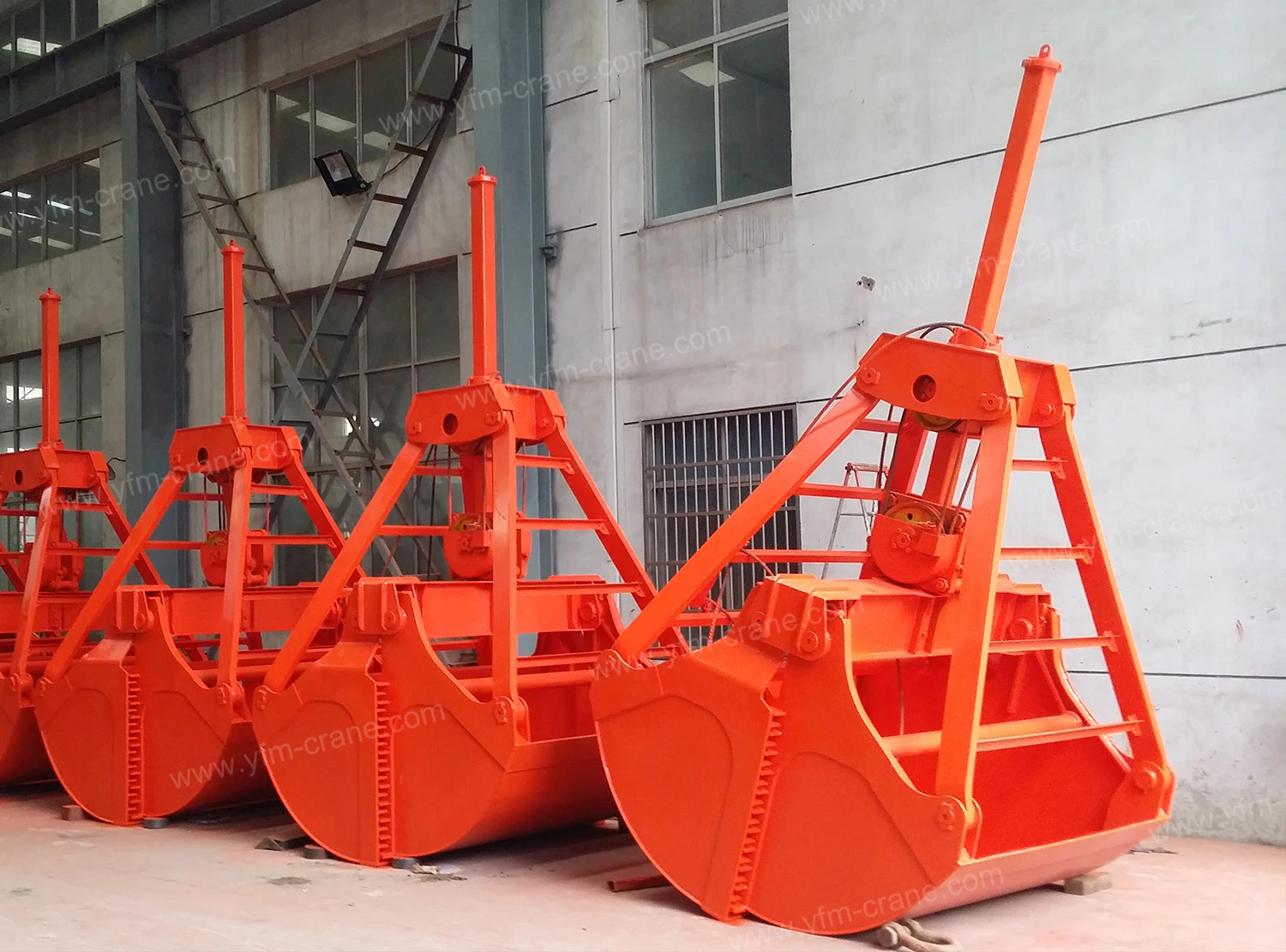
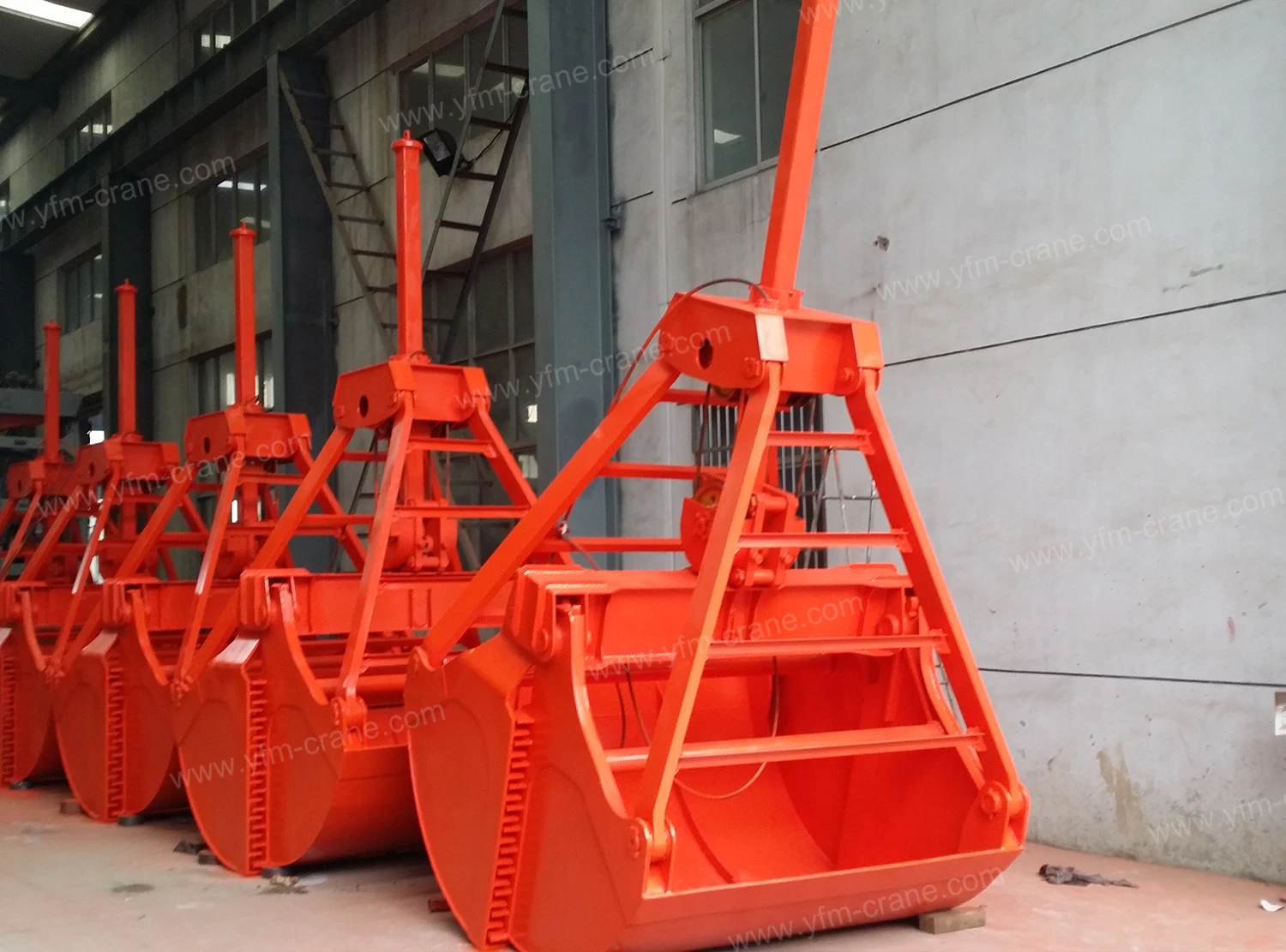
How the Touch-Down Mechanism Works
The operating sequence is deliberately simple. There is nothing to program and nothing to calibrate on site.
The grab is lowered in its open position. Once it lands on the material pile, the crane operator slacks the rope. That slack action releases a mechanical latch inside the grab head. When the rope is pulled back up, the jaws close around the load and stay locked for the lift.
At the discharge point, the grab is set down again. The rope goes slack once more, the latch unlocks, and as the grab is lifted the jaws swing open and the material spills out. The empty grab returns to the pile and the cycle repeats.
This is why the Single Rope Mechanical Grab is often called a "touch-down grab." The ground contact itself is the control signal. No radio remote, no pendant cable, no operator standing beside the hopper with a pull rope.
Why It Still Makes Sense in 2026
Motor grabs and radio-controlled grabs are faster. That is true. A single-rope mechanical grab will not win a throughput race against a hydraulic unit with a remote in the cab.
But speed is not the only number that matters. Here is what a single rope mechanical grab does better than almost anything else on the hook:
- The grab works on any crane with a single drum.
You do not need to modify the crane, add a second winch, or run power to the grab. Hook it on and go. For shipboard cranes and smaller wharfs where two-rope grabs simply cannot operate, this is not a compromise - it is the practical solution.
- There is almost nothing to break.
No hydraulic hoses to leak. No solenoids to burn out. No batteries to charge. The moving parts are the linkage, the latch mechanism, and the jaw hinges. Lubrication is the main maintenance task. That matters in dusty coal yards, grain terminals, and dredging sites where electronics have a short life.
- It takes abuse without drama.
The jaws are typically manganese steel or Hardox-lined, with replaceable wear plates at the tips. Reinforced pivot points handle the shock loads that come with grabbing rock, clinker, or scrap. If a liner wears out, you replace it. You do not rebuild the whole grab.
- It works underwater.
Dredging silt, mud, and clay with a shipboard crane is a standard application. The mechanical design has no seals to fail in submerged conditions, and the stainless or coated hardware survives saltwater exposure with reasonable care.
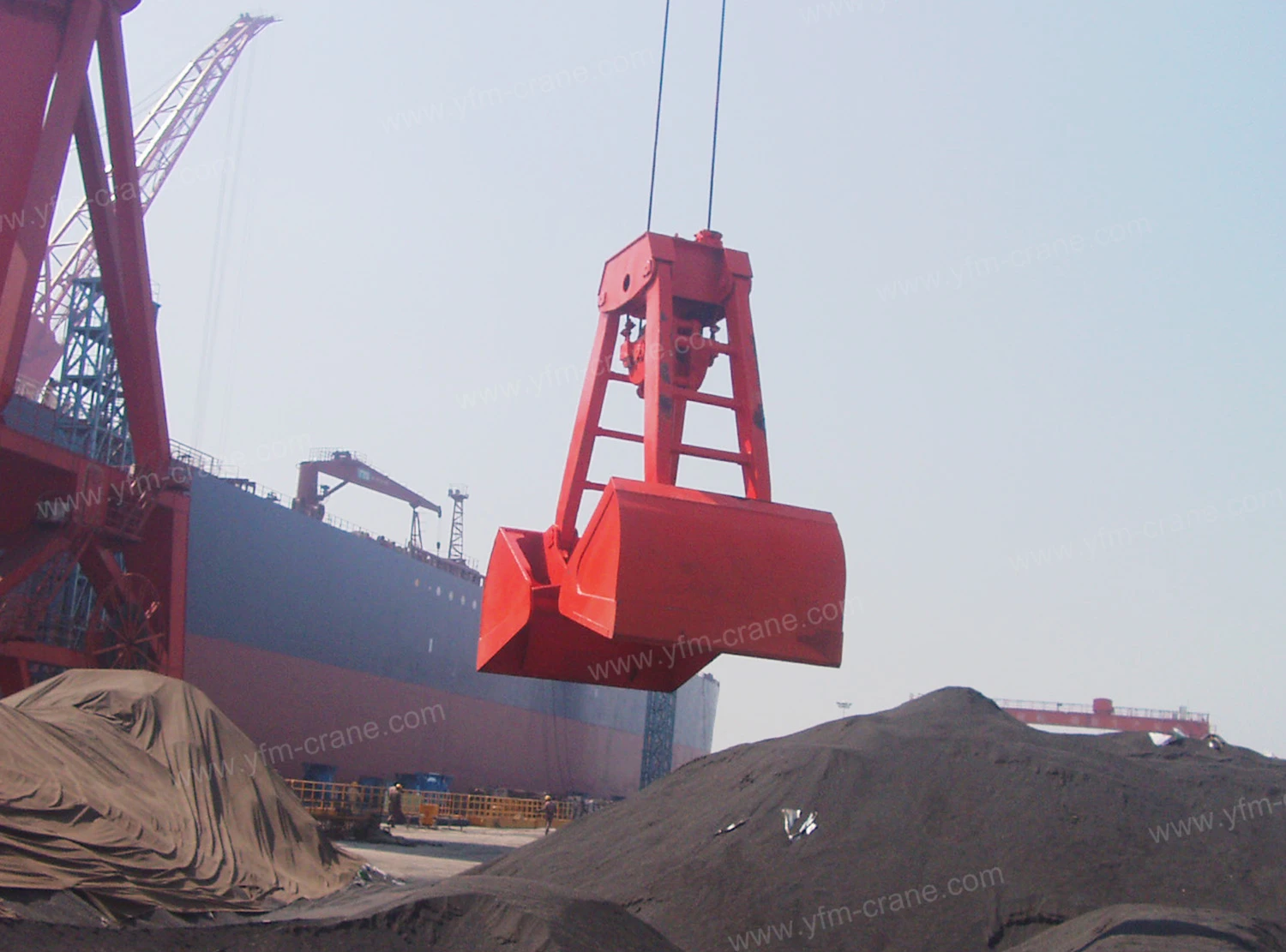

Where It Gets Used
You will see the Single Rope Mechanical Grab in four broad categories of work:
- Port and vessel handling.
Coal, clinker, fertilizer, grain, and mineral concentrates. If the crane is on the ship rather than the quay, a single-rope grab is often the only realistic option.
- Yards and silos.
Grain elevators, cement terminals, and aggregate yards that use older single-drum cranes. The grab transfers bulk material from pile to hopper without requiring a second operator on the ground.
- Dredging and underwater recovery.
Silt, mud, clay, and debris from harbors and canals. The grab can be lowered to depth and cycled by touch-down without any surface control beyond the hoist drum.
- Scrap and irregular material.
Orange-peel configurations with four or five tines handle scrap metal, foundry slag, and oversized rock that a clamshell would drop.
What to Check Before You Order
Three things determine whether a single rope mechanical grab will perform well on your site:
- Material density.
Single-rope grabs are most effective on materials between roughly 0.5 and 2.0 tonnes per cubic metre. Coal, grain, sand, and light aggregates are ideal. For iron ore or heavy slag above 2.5 t/m³, expect reduced fill factors unless you spec a smaller bucket volume relative to the crane's SWL.
- Crane line speed.
The touch-down mechanism depends on the rope going slack cleanly. Very slow lowering speeds can make the latch action sluggish. Most standard single-drum cranes are fine, but it is worth confirming line speed if you are retrofitting onto an older winch.
- Working height and hopper reach.
Because the grab opens by touch-down, the discharge point must be physically accessible to the jaws. A grab opening at 5 metres working depth behaves differently from one cycling at 25 metres. Match the grab's rope length and shock-absorbing design to your actual lift height.
Specifications at a Glance
| Parameter | Typical Range |
|---|---|
| Grab capacity | 5 – 15 m³ |
| Material density | 0.5 – 3.0 t/m³ |
| Rope diameter | 14 – 36 mm |
| Jaw configuration | Clamshell or orange peel |
| Dead weight | 300 – 4,000 kg |
| Max working depth | 5 – 25 m |
| Certifications | CE, ISO 9001, ISO 4301 |
Ranges are indicative. Exact sizing depends on material and crane capacity.
A Single Rope Mechanical Grab is not the fastest grab you can buy. It is not the most automated. What it is: the most widely compatible, the simplest to maintain, and the least likely to leave you stranded with a dead hydraulic pump on a Saturday morning.
If your crane has one drum and your material is manageable, this grab will cycle reliably for years with nothing more than grease and the occasional jaw liner replacement. That kind of simplicity has a value that does not show up on a throughput chart.
Hot Tags: single rope mechanical grab, China single rope mechanical grab manufacturers, suppliers, factory, crane grab bucket, grappling hook, industrial mechanical grab, material handling grabber arm, mining mechanical grabbing hook, recycling mechanical grabbing hook